

If you have watched any K-Dramas or browsed through YouTube, you have likely encountered a scene where characters slurps down a steaming bowl of red, spicy noodles. Or perhaps you’ve seen the viral “Fire Noodle Challenge” (Buldak) that took the Social media by storm.
But here is the truth: Korean Ramyeon (라면) is so much more than just a viral spicy challenge.
For Koreans, Ramyeon is soul food. It is a quick lunch for students, a midnight snack for office workers, an essential item for camping trips, and the most popular cure for a hangover. It is deeply embedded in the everyday life and culture of Korea.
If you are planning a trip to Korea, walking into a convenience store (CU, GS25, 7-Eleven) can be overwhelming. You will face a massive wall of noodles with hundreds of different packages. Which one should you choose? Is it the same as Japanese Ramen? How do you eat it like a local?
In this comprehensive guide, we will dive deep into the world of Korean Ramyeon. From understanding the difference between “Ramyeon” and “Ramen” to mastering the famous Han River Ramyeon machine, here is everything you need to know.
The Great Debate: Korean Ramyeon vs. Japanese Ramen
Before we start eating, we need to clear up a common linguistic confusion. To many Westerners, the words sound the same, but in East Asia, they refer to completely different dishes.
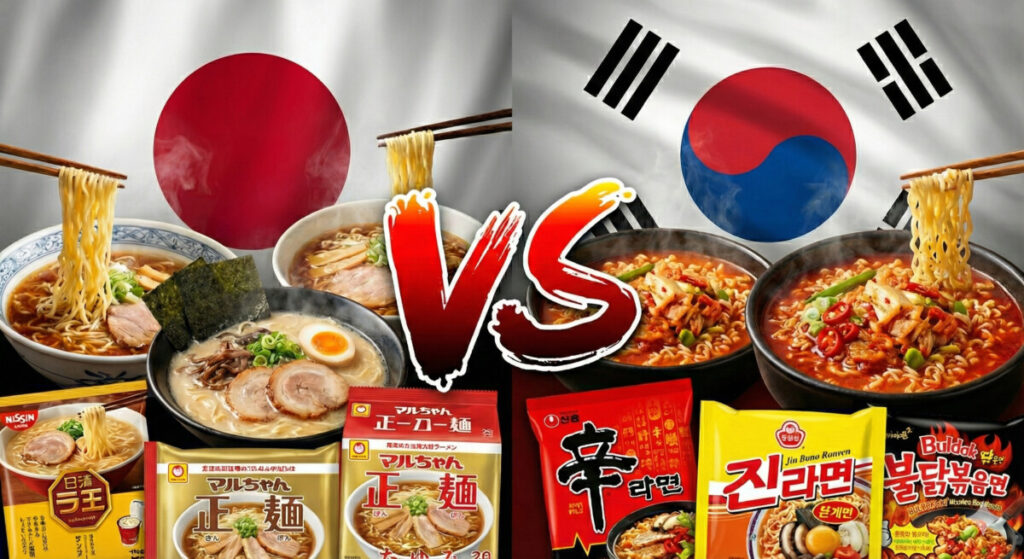
Japanese Ramen (라멘)
Japanese Ramen typically refers to a restaurant dish. It involves fresh noodles (not dried) served in a rich broth that a chef has simmered for hours—sometimes days—using pork bones, chicken, or miso. It is a culinary craft, similar to how pasta is treated in Italy.
Korean Ramyeon (라면)
When Koreans say “Ramyeon,” they are almost exclusively talking about Instant Noodles. However, do not let the word “instant” fool you. In Korea, instant noodles are not just cheap survival food for college students. They are a highly developed food product. The noodles are fried to maintain a specific chewy texture(but there are non-fried, dried ramyeons), and the soup bases are complex, savory, and often spicy.
Why is Ramyeon so popular in Korea? It fits perfectly with Korea’s hasting(Hurry-Hurry) culture. It’s fast, delicious, consistent, and available 24/7 anywhere in the country. When you visit Korea, eating a cup of Ramyeon at a convenience store table at 2:00 AM is a cultural experience as authentic as visiting a palace.
Decoding the Aisle: The 3 Main Types of Korean Ramyeon
The wall of noodles at a Korean mart can be intimidating. To make it easy, we can categorize Korean Ramyeon into three distinct styles based on the soup.
A. The Red Broth (The Soul of Korea)
This is the standard. About 70% of the Ramyeon you see will have a red package. The broth is usually beef or kimchi-based, with red pepper powder (Gochugaru) giving it a kick.
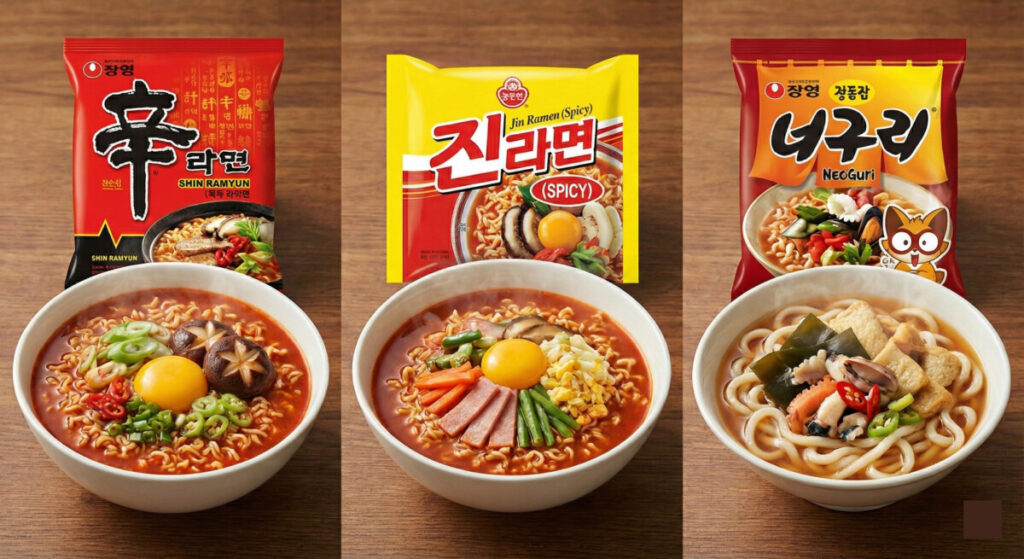
- Shin Ramyun (신라면): The absolute King. It has been the #1 seller for decades. It has a spicy beef broth and distinct shiitake mushroom flavor. If you can handle Shin Ramyun, you can handle most Korean food. This ramyeon is
- Jin Ramen (Spicy / Red Package): The eternal rival to Shin. It is slightly cheaper and has a more savory, less piercing spice. Many Koreans swear by this brand.
- Neoguri (너구리): Famous for being on the movie ‘Parasite’. It features thicker, udon-like noodles and a spicy seafood broth with a piece of real dried kelp inside.
Fun Fact: The “Shin Ramyun Index” (How to Survive Spiciness in Korea)
Here is a secret tip for your trip. In Korea, Shin Ramyun is not just a noodle; it is a standard unit of measurement for spiciness.
When you go to a restaurant to eat Tteokbokki or Kimchi Stew, and you ask the waiter, “Is this spicy?”, they will often answer using Shin Ramyun as a reference.
- “It is about Shin Ramyun level.” (신라면 정도예요): It has a kick, but if you can eat Shin Ramyun, you will be fine.
- “It is less spicy than Shin Ramyun.” (신라면보다 덜 매워요): Safe for most people.
- “It is spicier than Shin Ramyun.” (신라면보다 매워요): Warning! Be prepared.
💡 Traveler’s Survival Phrase: If you want to ask about the spice level like a local, ask this:
“Is it spicy as Shin Ramyun or even more?”
B. The White Broth (Savory & Non-Spicy)
Not everyone likes spicy food, and that is okay. White broth Ramyeon is inspired by traditional Korean soups like Gomtang(Bone soup) or Kalguksu(Knife-cut noodles with seafood based broth).
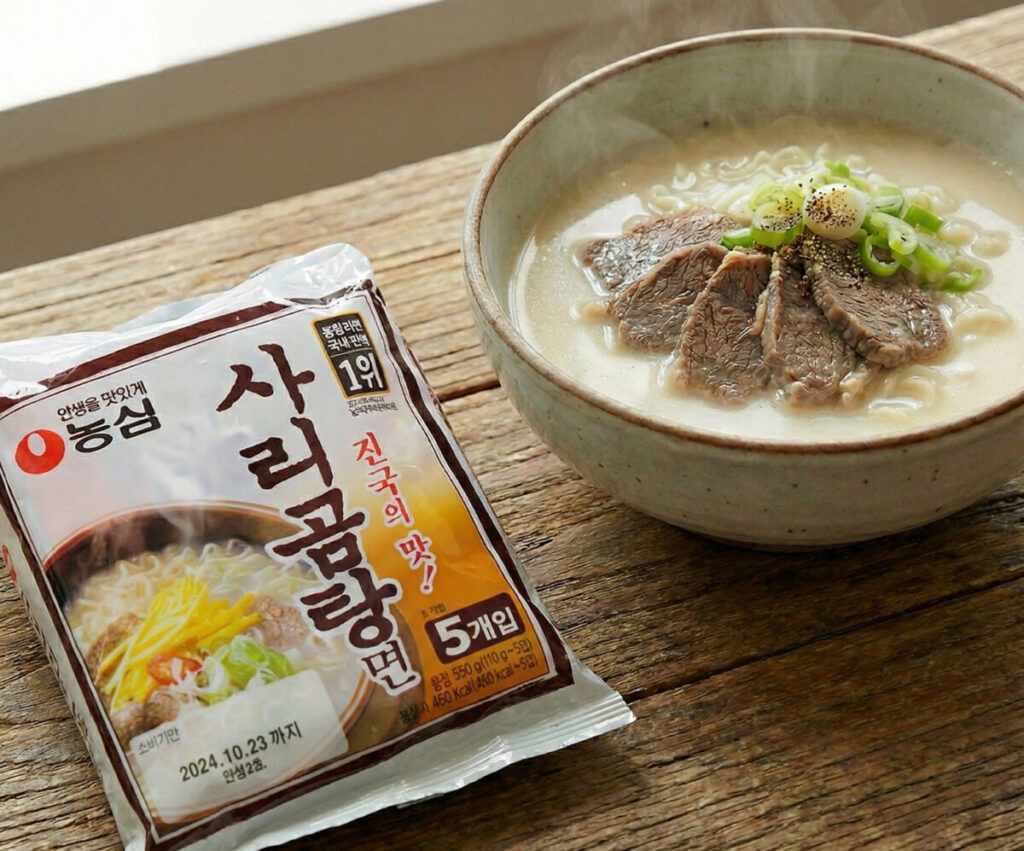
- Sari Gomtang (사리곰탕): A rich, milky beef bone soup. It tastes creamy and salty, similar to a good beef stew. It is non-spicy and great for your lunch or dinner.
- Myeolchi Kal-guksu (멸치칼국수): This is a hidden gem for those who want a “lighter” meal. Myeolchi” means Anchovy. The broth is clear, savory, and tastes exactly like the traditional handmade noodle soup sold in Korean markets. It has zero spice and it uses non fried dried noodle. For me, This is the best one.
- Twigim Udon (튀김우동): A soy-sauce based udon style cup noodle with tempura flakes. Very mild and savory.
C. The Soupless / Stir-Fried (The Trendy Choice)
These noodles are boiled, drained, and then mixed with a sauce.
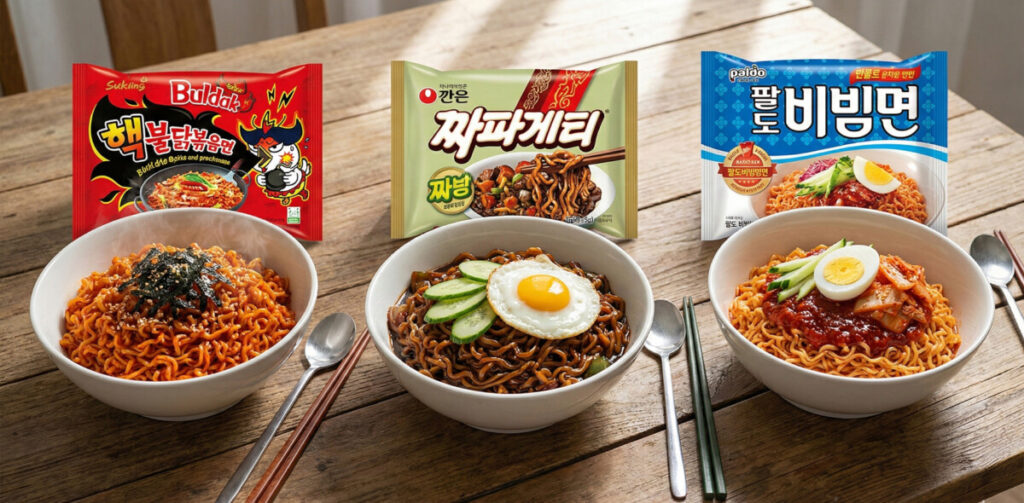
- Buldak Bokkeum Myeon (Hot Chicken Flavor Ramen): The global icon. It is extremely spicy. There are many variations: Carbonara (pink packet) is creamy and less spicy, making it a favorite among tourists.
- Chapagetti (짜파게티): This is the instant version of Jajangmyeon (Black Bean Noodles). It is savory, slightly sweet, and earthy. It has zero spice and is loved by children and adults alike. If you mix this with neoguri, that’s the famous “Chapaguri” shown in the movie ‘parasite.’
- Paldo Bibim Myeon (팔도비빔면): A summer favorite. You rinse the boiled noodles in ice-cold water and mix them with a sweet and sour apple-chili paste. It is refreshing and pairs perfectly with grilled pork belly (Samgyeopsal).
Packet vs. Cup: Which is Better?
You will often see the same brand in both a plastic bag (packet) and a cup/bowl form. Is there a difference? Yes.
- Packet Ramyeon: Requires a pot and a stove. The noodles are thicker, and the portion is larger. The taste is superior because the high heat of the stove cooks the noodles perfectly. This is best for cooking at your Airbnb.
- Cup Ramyeon: Designed for convenience. The noodles are thinner so they can cook in just hot water.
- Pro Tip: Koreans distinguish between “Small Cup” and “Big Cup.” Surprisingly, many locals prefer the small cup version (especially for Yukgaejang – 육개장) because the super-thin noodles have a unique, delicate texture that the big cups don’t have.
The Must-Do Activity: “Han River Ramyeon” (한강 라면)
If you only eat Ramyeon once in Korea, do it at the Han River Park. Picnicking by the Han River (Yeouido, Banpo, or Ttukseom parks) is a staple of Seoul life. But the highlight is the Automatic Ramyeon Machine.
This experience is so popular that it has become a bucket-list item for tourists. Here is your step-by-step guide to looking like a local.
Step-by-Step Guide to Using the Han River Machine
- Find a Convenience Store: Look for a GS25, CU, or 7-Eleven situated right on the riverbank. You will see people lining up.
- Buy Your Kit: Purchase a packet of Ramyeon. You must also buy a specific foil or paper bowl designed for the machine (usually sold at the counter for a small fee).
- Tip: Do NOT buy a cup noodle. You need the packet version to use the machine.
- Open and Pour: Open the packet, put the noodles and the soup powder/flakes into the foil bowl.
- Scan the Barcode: Go to the machine. Scan the barcode on the side of the paper bowl (not the Ramyeon packet). The machine recognizes exactly what type of noodle it is.
- Press Start: Place the bowl on the burner and press the start button.
- Magic Happens: The machine will dispense the exact amount of hot water needed and start boiling. A timer will appear (usually 3 to 4 minutes).
- Stir Occasionally: Use disposable chopsticks to stir the noodles gently so they cook evenly.
- Enjoy: Carefully carry your tray to a picnic mat or a bench overlooking the river.
Why does it taste better here? Perhaps it is the scenery, the cool river breeze, or the scientifically perfect water-to-boil ratio of the machine. Whatever it is, “Han River Ramyeon” is widely considered the most delicious way to enjoy instant noodles in Korea.
Local’s Secret: Don’t just eat noodles. Buy a “Hot Bar” (sausage on a stick) or a can of beer to go with it. That is the true “Chimaek” (Chicken and Beer) rival combo.
How to Upgrade Your Ramyeon (Modding)
Koreans rarely eat Ramyeon “plain.” We love to add ingredients to enhance the flavor. Here are three easy ways to customize your bowl like a pro:
1. The “Kimbap” Mix Buy a Triangle Kimbap (Samgak-gimbap) from the convenience store—Tuna Mayo flavor is my favorite. After you finish the noodles and have some spicy soup left, unwrap the rice ball and dump it into the soup. Mix it up to make a spicy risotto. This is the ultimate finish.
2. The Cheese Slice If you are eating a spicy noodle (like Shin Ramyun or Buldak), place a slice of yellow chedda cheese processed cheese on top. Let it melt into the soup. It makes the broth creamier and cuts down the spiciness.
3. The Egg (For Pot Cooking) If you are cooking in a pot (or at the Han River), crack a raw egg into the boiling soup about 1 minute before it finishes.
- Style A: Stir it vigorously for a mild, cloudy soup.
- Style B: Leave it whole to poach it, so you have a soft yolk to dip your noodles in.
6. Recommendations: Find Your Perfect Match
Still undecided? Here is my curated recommendation based on your taste profile.
- For the “Spice Hunter”: Try Teumsae Ramyun (틈새라면). It is significantly spicier than Shin Ramyun.
- For the “K-Movie Fan”: Make Chapaguri. Buy one Chapagetti and one Neoguri. Cook them together. It is a savory, seafood-meat explosion. Recipe is here.
- For the “Safe & Comforting”: Jin Ramen Mild (Blue Package) or Snack Ramen. No spice, just pure umami.
- For the “mild flavor lovers” : Sari gomtang(Beef broth), Myeolchi Kalguksu(Anchovy broth)
- For the “Souvenir Hunter”: Look for “Sesame Ramen” (Chamggae). This is unique to Korea and hard to find overseas, but it might be little spicy.
⚠️ Important Note on Souvenirs: If you plan to take Ramyeon back to your home country (especially the USA, Canada, or Europe), check the customs regulations. Many countries prohibit bringing in products containing “meat extracts.”
- Safe: Seafood-based or Vegan certified Ramyeon.
- Risky: Beef or Pork bone broth based Ramyeon (like Shin Ramyun Black or Gomtang).
Conclusion
Korean Ramyeon is more than just a quick meal; it is a cultural lens through which you can understand modern Korea. It represents the speed, the innovation, and the comfort-seeking nature of Korean people.
Whether you are slurping a spicy bowl at a plastic table by the Han River, or cooking a late-night pot in your Gangnam hotel room, you are participating in a genuine local ritual.
So, forget the diet for one day. Walk into that convenience store, grab a shiny red packet, and experience the warmth of Korea.
By the way, while you are at the convenience store to buy Ramyeon, you can check your remaining balance of your [T-Money Card] and also you can buy ramyeon with your t-money card. Wondering about the places you can use your t-money elsewhere? We are so pleased to help you out.
What flavor are you most excited to try? Or have you already tried the Han River machine? Share your experience in the comments below!