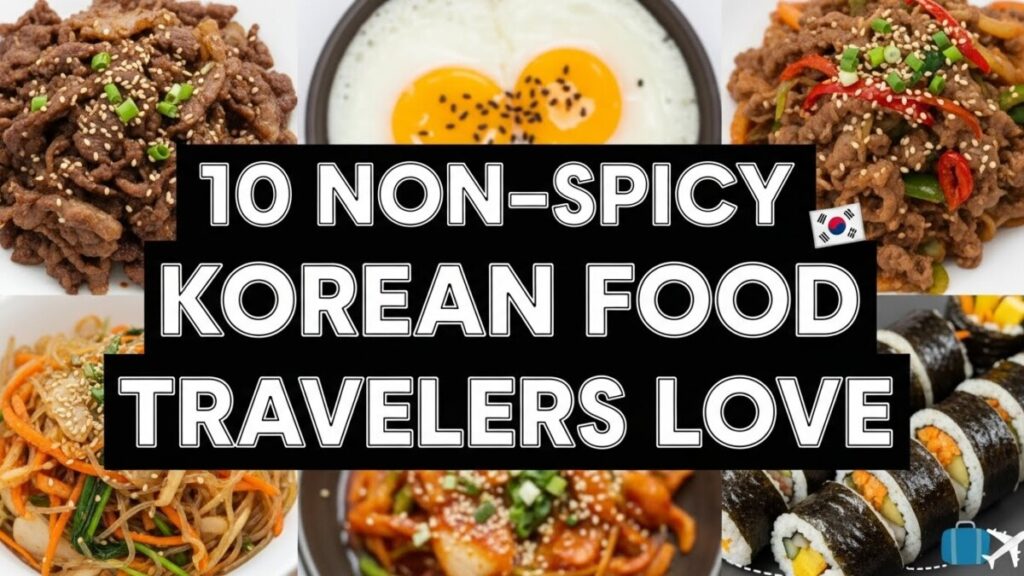
When international travelers plan a trip to Korea, one question pops up more than any other: “Is all Korean food spicy?”
With the global fame of fire noodles and the bright red hue of Kimchi, it is a common misconception that Korean cuisine is designed solely for thrill-seekers who love heat. For families travelling with children, or for foodies with sensitive stomachs, this reputation can be quite intimidating. You might be worried that you will be stuck eating plain rice or fast food during your entire trip.
We are here to tell you that this is absolutely not true.
In reality, traditional Korean cuisine—especially the royal court cuisine of the Joseon Dynasty—was grounded in savory, nutty, and mild flavors. Ingredients like soy sauce (ganjang), soybean paste (doenjang), and sesame oil play a much larger role than chili powder in the history of K-Food.
If you are looking for the best non-spicy Korean food, you have come to the right place. We have curated a definitive list of the top 10 mild, delicious, and culturally rich dishes that travelers absolutely love, from our experience. From trendy BBQ spots to comforting noodle soups, here is your survival guide to eating well in Korea without the burn.
1. Udae-galbi (Bone-in Beef Short Ribs)
The Trendy BBQ That Taken Seoul by Storm
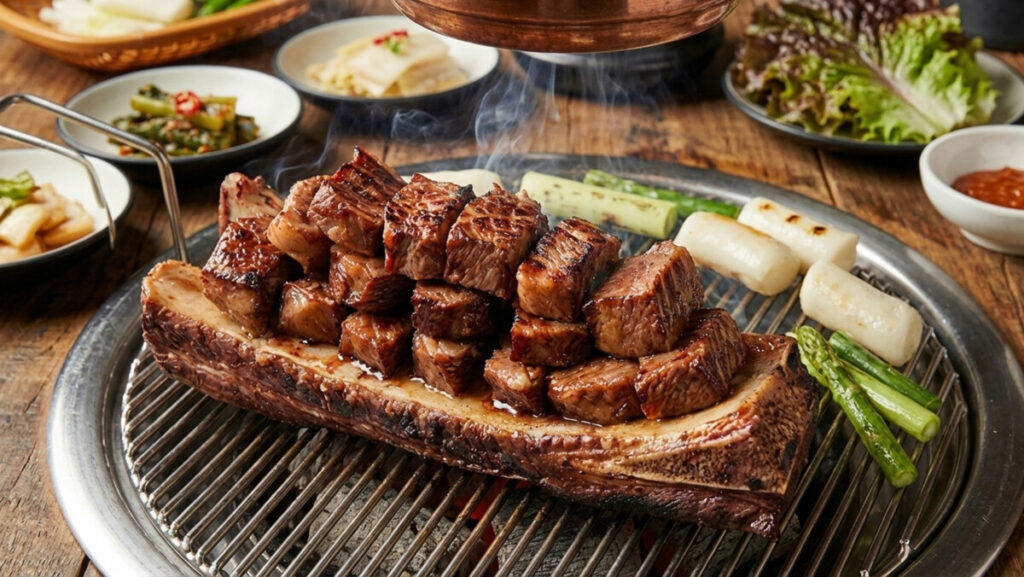
If you are a meat lover searching for the ultimate non-spicy Korean food, look no further than Udae-galbi. While traditional Korean BBQ is famous worldwide, Udae-galbi is the specific cut that has dominated the food trends in Seoul over the last few years.
“Udae” refers to the massive cow rib bone. Unlike the thinly rolled Galbi you might be used to, Udae-galbi is cut vertically along the bone, looking almost like a tomahawk steak. The meat is pre-marinated in a sweet and savory soy-based sauce and then typically straw-grilled or charcoal-grilled before arriving at your table.
Why Travelers Love It:
The flavor is a perfect balance of smoky, sweet, and savory. Because it is marinated, the meat caramelizes beautifully on the grill, creating a crispy exterior and a juicy, melt-in-your-mouth interior. It is completely free of spice, making it a hit with children and adults alike.
📍 Where to Eat (Local Hot Spot):
The spiritual home of the Udae-galbi trend is the Samgakji area in Yongsan-gu, Seoul.
- Recommendation: Look for restaurants like Mongtan. Be warned, the waiting lines can be long, but the smoky flavor of straw-grilled beef is worth every second. There are also good restaurants in Gangnam(Shinnonhyeon).
How to Eat Like a Local:
After you finish the meat, do not let them take the bone away! Ask the staff to trim the gristly bits attached to the bone. They will grill these small pieces until they are crunchy. Pair this with a non-spicy fried rice (bokkeumbap) for the perfect finish.
2. Andong Jjimdak (Soy Braised Chicken)
The Perfect Savory Alternative to Spicy Dakgalbi
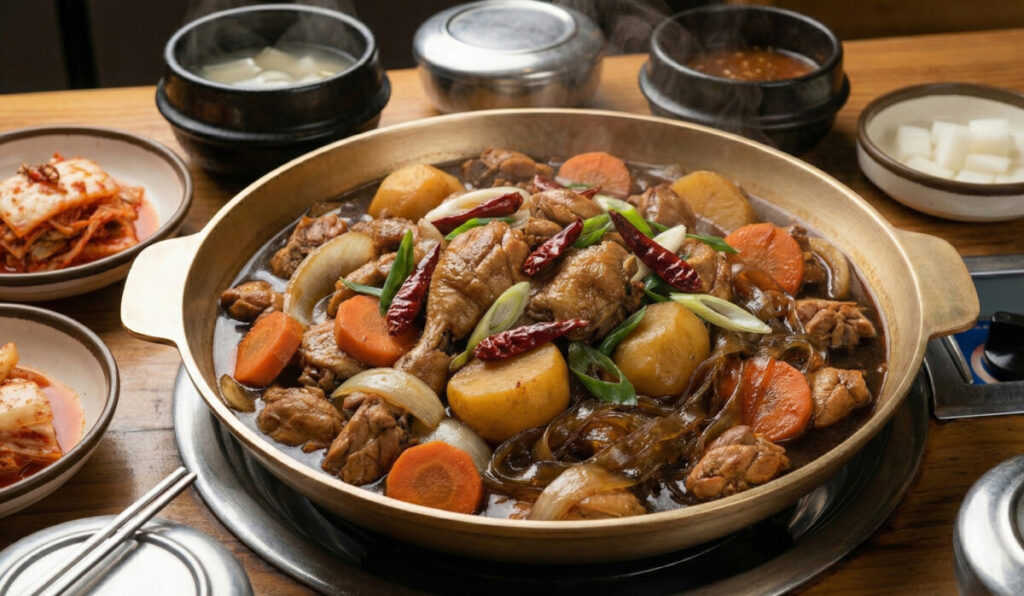
Many tourists make the mistake of ordering Dakgalbi (spicy stir-fried chicken) expecting a mild dish, only to be overwhelmed by the heat. If you want a chicken dish that is rich in flavor but zero in spice, Andong Jjimdak is the answer.
Originating from the city of Andong, this dish is a braised chicken stew cooked in a dark, salty-sweet soy sauce broth. It is packed with vegetables like potatoes, carrots, onions, and sometimes cucumbers. The secret weapon of this dish is the dangmyeon (flat glass noodles) that soak up all the savory sauce.
Why It’s a Top Non-Spicy Korean Food:
It offers a deep, complex flavor profile without relying on chili. The sweetness from the vegetables and the saltiness of the soy sauce create a flavor similar to Teriyaki but with more depth.
📍 Where to Eat (Local Hot Spot):
- Andong Old Market: If you are visiting the city of Andong, the “Jjimdak Alley” in the market is a must-visit.
- Myeongdong, Seoul: There are numerous Jjimdak specialty chains in Myeongdong tailored for tourists.
⚠️ Important Tip:
Although the base is soy sauce, some restaurants add dried red chili peppers (Gochu) to cut the grease. When ordering, always say: “No spicy, please” or “An-maep-ge hae-ju-se-yo”. They will remove the peppers for you.
3. Jajangmyeon (Korean Black Bean Noodles)
The Soul Food of Korea
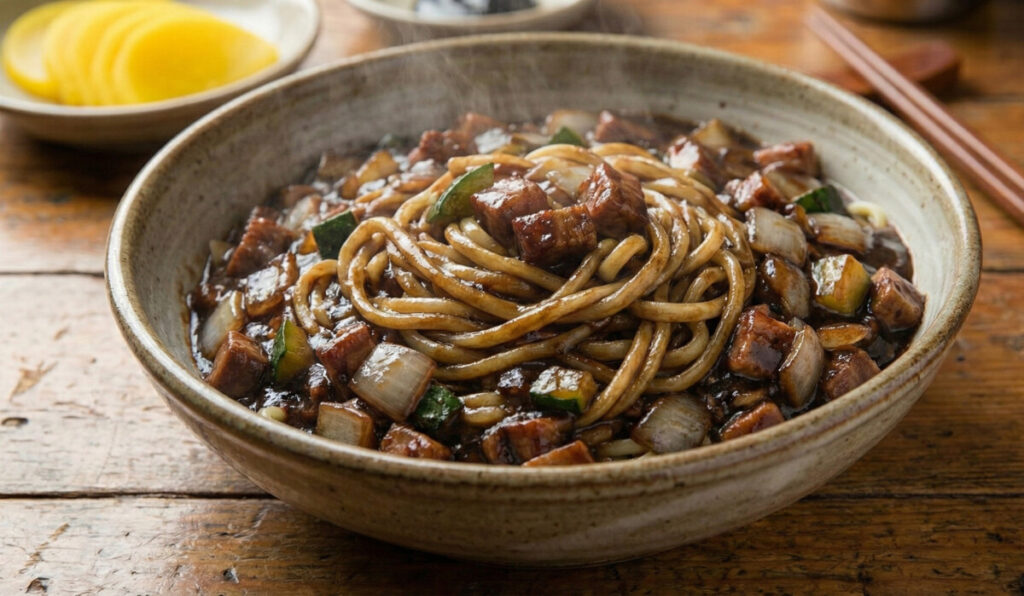
You cannot talk about non-spicy Korean food without mentioning Jajangmyeon. This is arguably the most popular delivery food in Korea and a staple in every Korean’s childhood.
The sauce is made from chunjang (black bean paste), which is fried in oil with diced pork, copious amounts of onions, and zucchini. The result is a thick, glossy, black sauce that is savory, earthy, and slightly sweet from the caramelized onions.
Why Travellers Love It:
It is the ultimate comfort food. The noodles are chewy, and the sauce is rich and satisfying. Since it contains absolutely no chili powder, it is the number one menu item for kids in Korea, and travelers who look for non-spicy Korean food for their kids.
📍 Where to Eat (Local Hot Spot):
Incheon Chinatown is the birthplace of Jajangmyeon.
- Must-Visit: The Jajangmyeon Museum in Incheon allows you to learn the history and taste the “original” style, which is slightly different from the modern sweet version. You can also find some Chinese restaurants in our list up of Culinary Class Wars restaurants.
- Anywhere in Seoul: To be honest, you really can’t go wrong with Jajangmyeon at any Chinese restaurant in Seoul. Just walk in anywhere that looks clean.
Local’s Tip:
It is always served with yellow pickled radishes called Danmuji. Do not ignore them! The sour crunch of the radish perfectly balances the richness of the black bean sauce. Also, mix the noodles thoroughly with chopsticks in both hands before eating.
4. Mul-naengmyeon (Cold Buckwheat Noodles)
An Icy Shock to the Senses
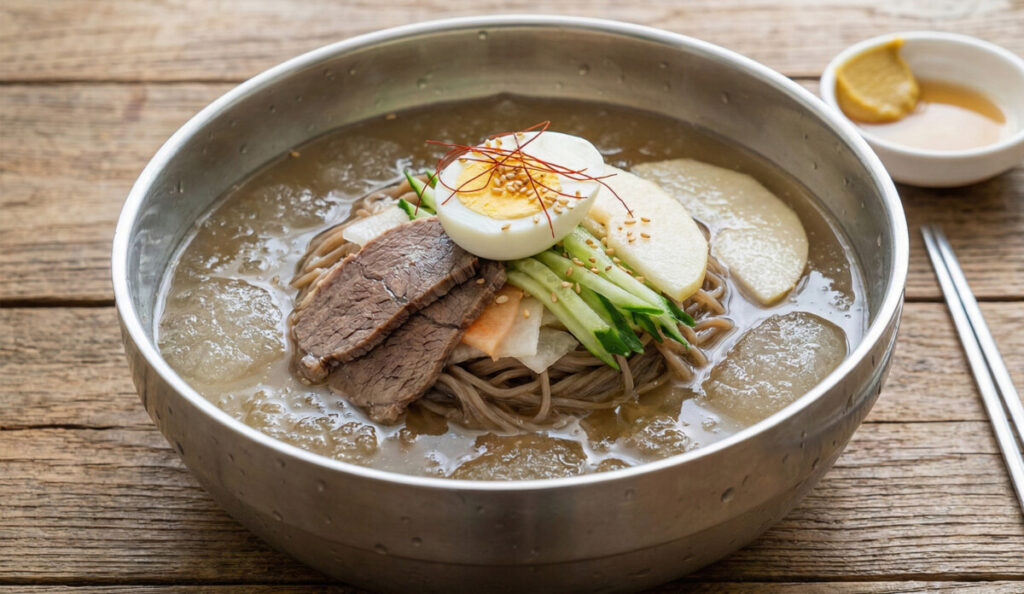
“Cold noodles? Is that a salad?” Travellers are often confused by the concept, but Mul-naengmyeon is a delicacy you must try. It is a noodle soup served in a broth that is literally slushy and semi-frozen.
While there is a spicy version called Bibim-naengmyeon, you should order Mul-naengmyeon (Water Noodles) to try a non-spicy Korean food. The broth is typically made from beef brisket or dongchimi (radish water kimchi) and has a mild, tangy, and deeply savory flavor.
Why It’s Unique:
It is the only noodle dish that cools you down from the inside out. The texture of the buckwheat noodles is unique—chewy and elastic.
📍 Where to Eat (Local Hot Spot):
The Ojang-dong and Euljiro areas in Seoul are famous for their veteran Naengmyeon alleys.
- Recommendation: Woo Lae Oak is a legendary spot that has been serving authentic Pyongyang-style cold noodles for generations.
How to Eat:
The noodles can be very long. It is acceptable for travelers to use scissors to cut the noodles once or twice. Add a splash of vinegar and mustard sauce provided on the table to customize the broth to your liking.
5. Bulgogi (Marinated Beef BBQ)
The Global Ambassador of Korean Cuisine
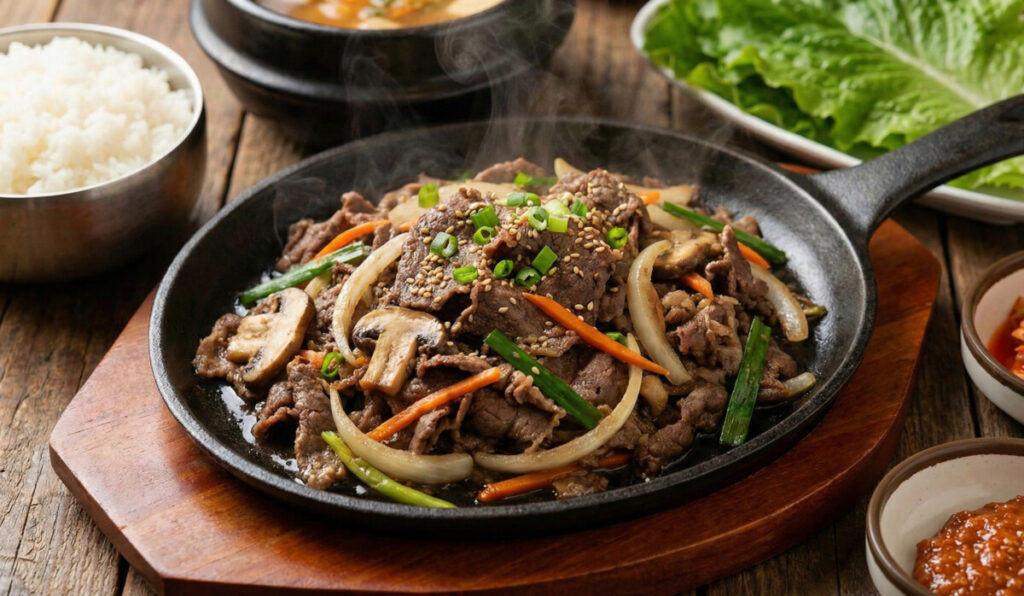
If Kimchi is the king of spicy food, Bulgogi is the queen of non-spicy Korean food. It is one of the most recognizable Korean dishes globally, and for good reason.
Bulgogi consists of thin slices of prime beef marinated in a mixture of soy sauce, sugar, sesame oil, garlic, and often pear juice. The pear juice acts as a natural tenderizer, making the meat incredibly soft.
Styles of Bulgogi:
- Seoul Style: Cooked on a special copper dome pan with broth, mushrooms, and glass noodles around the edges. It is almost like a sweet beef stew.
- Gwangyang/Eonyang Style: Grilled over charcoal until dry and smoky.
📍 Where to Eat:
You can find high-quality Bulgogi restaurants anywhere in Korea, but Eonyang (near Ulsan) is famous for its specialized Bulgogi district.
Local’s Tip:
Try the “Ssam” culture. Take a leaf of lettuce or sesame leaf, place some rice and Bulgogi inside, add a tiny bit of Ssamjang (soybean paste), wrap it up, and eat it in one bite. It’s a flavor explosion.
6. Japchae (Stir-fried Glass Noodles)
A Festive Feast on a Plate
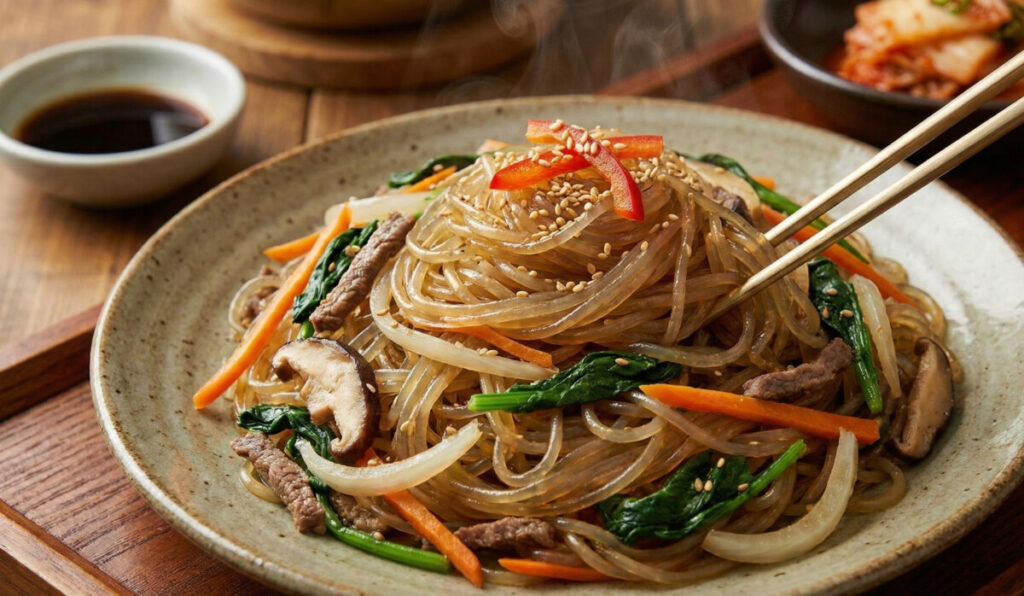
Japchae is a dish that screams “celebration” in Korea. It is traditionally served on birthdays, weddings, and holidays, but travellers can enjoy it year-round.
The star ingredient is the noodles made from sweet potato starch, which gives them a unique, bouncy, and chewy texture. These noodles are stir-fried with a colorful array of vegetables (spinach, carrots, onions, mushrooms) and thin strips of beef, all seasoned with a balance of soy sauce and sugar.
Why Travellers Love It:
The dominant aroma is toasted sesame oil, which is universally loved. It is sweet, savory, and has a fascinating texture that is different from wheat or rice noodles.
📍 Where to Eat:
While it is often a side dish (banchan) at high-end restaurants, you can buy it as a main snack at Gwangjang Market in Seoul. Sitting on a bench in the bustling market eating a bowl of warm Japchae is a quintessential Seoul experience.
7. Tonkatsu (Korean-style Pork Cutlet)
The Retro Soul Food
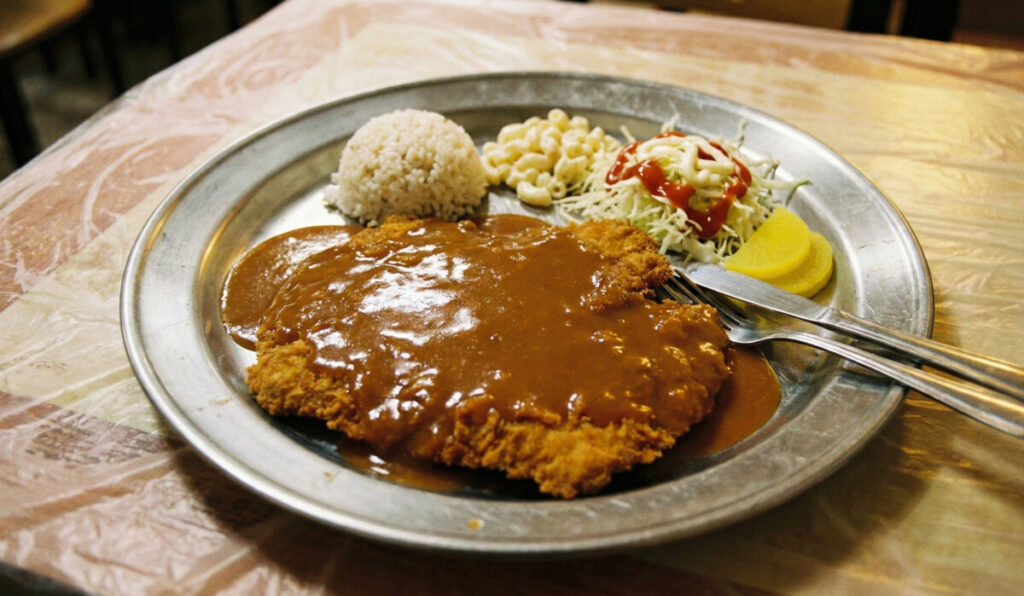
You might think Tonkatsu is Japanese, but Korean Donkkaseu is a distinct culinary experience. Unlike the thick Japanese version, the Korean style (often called Gyeongyang-sik) features pork loin that has been pounded very thin and fried until it is massive—often bigger than your face!
The defining feature is the sauce. It is not a dipping sauce but a sweet, demi-glace style brown sauce that is poured generously over the cutlet, making the breading slightly soft and flavorful.
Why It’s a Top Non-Spicy Korean Food:
It is fried comfort food at its best. It is familiar yet different enough to be interesting. It comes with a retro vibe, often served with a cream soup appetizer.
📍 Where to Eat (Local Hot Spot):
You must visit Namsan Tonkatsu Street near the N Seoul Tower.
- Experience: It is a local ritual to hike up Namsan Mountain or take the cable car, enjoy the view, and then come down to eat a giant Tonkatsu.
8. Galbijjim (Braised Beef Short Ribs)
A Meal Fit for a King
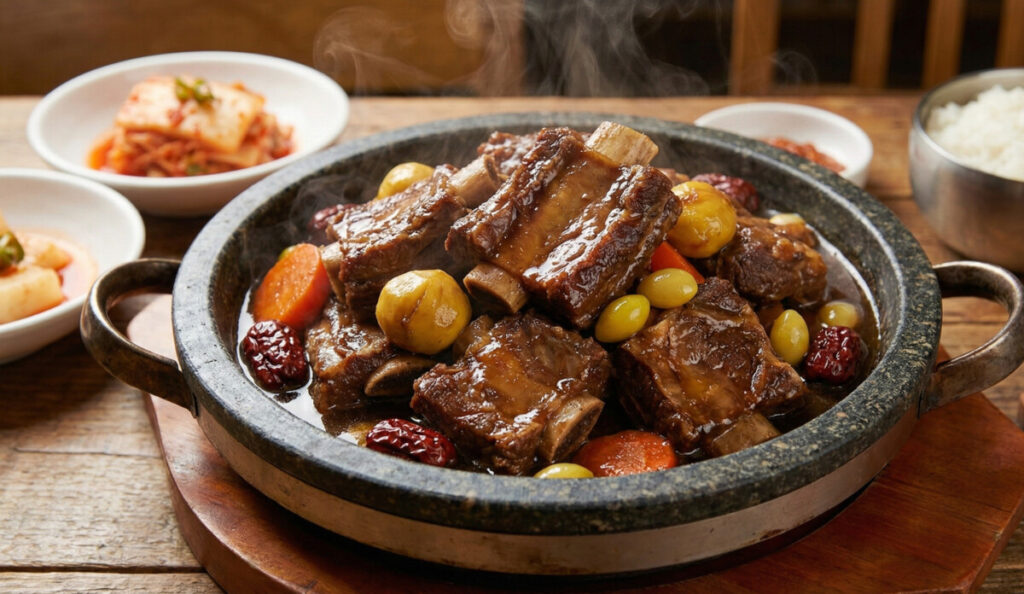
If you want to treat yourself to a premium dining experience, Galbijjim is the perfect choice. Historically served to Korean royalty, this dish involves slow-cooking beef short ribs until they are tender enough to fall off the bone with a spoon.
The sauce is a richer, deeper version of the Bulgogi marinade, often infused with medicinal herbs, chestnuts, gingko nuts, and jujubes (Korean dates).
Flavor Profile:
It is the epitome of “sweet and savory.” The meat is incredibly soft, making it a perfect recommendation for elderly travellers or children who struggle with chewy meat.
⚠️ Warning:
There is a popular variation called Maeun Galbijjim (Spicy Braised Ribs), famously from Daegu. Make sure you explicitly order the “Soy Sauce” version to ensure it is a non-spicy Korean food.
9. Kalguksu (Knife-cut Noodle Soup)
Warmth for the Soul
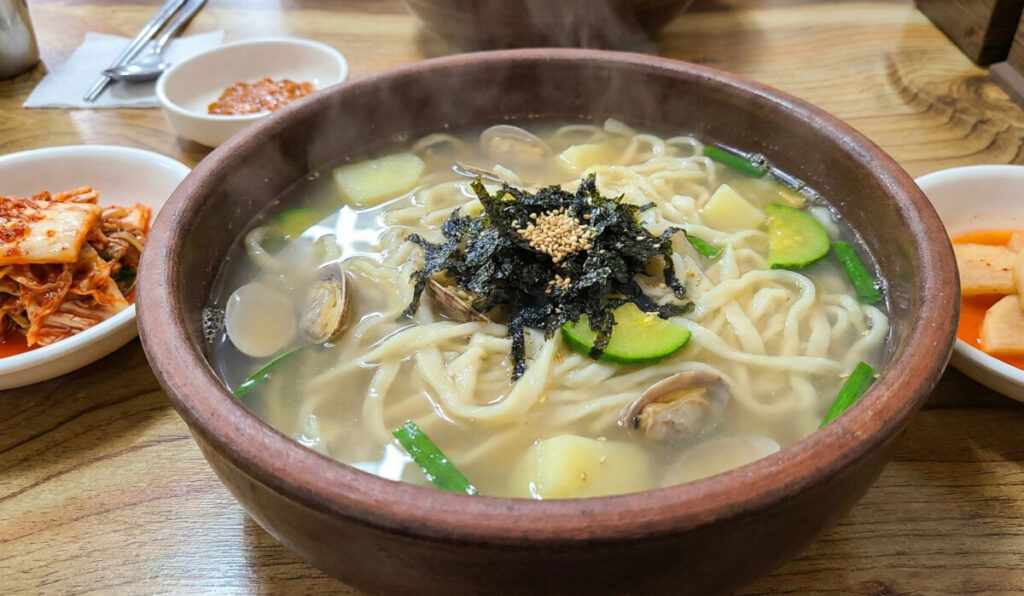
Kalguksu literally translates to “knife noodles.” The dough is rolled out by hand and cut with a knife, resulting in noodles that have a delightful, slightly uneven texture that machines simply cannot replicate.
The broth is typically made from chicken, anchovies, or clams (Bajirak). It is mild, hearty, and incredibly comforting. It is the Korean equivalent of Chicken Noodle Soup.
📍 Where to Eat (Local Hot Spot):
- Myeongdong Kyoja: This is a Michelin Bib Gourmand restaurant in Myeongdong famous for its chicken-broth Kalguksu and dumplings.
- Namdaemun Market: There is an entire “Kalguksu Alley” where you can get a cheap, authentic bowl.
- Anywhere in Seoul: For this non-spicy Korean food, you really can’t go wrong with at any decent restaurant in Seoul.
Local’s Tip:
Kalguksu restaurants are famous for their Kimchi. Even if you don’t like spicy food, try a small piece of the fresh, garlic-heavy Kimchi served here. The mild, starchy noodles balance the spice of the Kimchi perfectly.
10. Korean-style Hot Dog (K-Hotdog)
The Cheesy, Crispy, Sweet & Salty Sensation
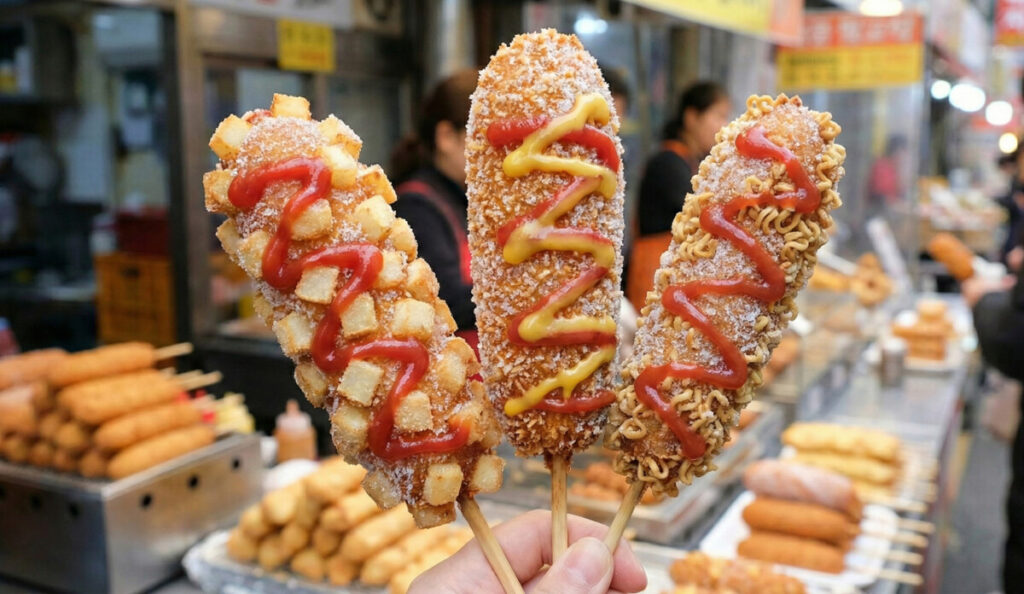
Forget everything you know about American hotdogs. The Korean Hotdog (often called “K-Hotdog”) is a completely different beast that has taken the world by storm. Unlike the soft cornmeal batter used in the West, Korean hot dogs use a chewy rice flour or yeast dough, which is then rolled in Panko breadcrumbs before deep-frying.
The result? An incredibly satisfying crunch that is far crispier than its western counterpart.
The “Myungrang” Style:
While you can find hot dogs everywhere, the brand “Myungrang Hotdog” popularized the modern style that locals love. It’s not just about the sausage anymore. You can choose various fillings:
- Mozzarella: The whole stick is cheese. When you bite into it, the cheese stretches for miles (a must for photos!).
- Half & Half: Half mozzarella cheese on top, half sausage on the bottom.
- Rice Cake: A chewy Korean rice cake inside instead of meat.
The Secret Ritual:
When they hand you the freshly fried hotdog, they will ask one crucial question: “Sugar?”
Always say YES.
They roll the hot, salty, greasy hotdog in white sugar granules. Then, you drizzle ketchup, honey mustard, or cheddar cheese sauce on top. The combination of sweet sugar, savory cheese, and crispy batter is the definition of addictive.
📍 Where to Eat:
Look for “Myungrang Hotdog” (명랑핫도그). It is a massive franchise found in almost every neighborhood and university district in Korea. It is cheap, freshly made to order, and undeniably delicious.
Conclusion: Enjoy Korea Without the Burn
Korea’s culinary landscape is vast and diverse. Just because you have a low tolerance for spice doesn’t mean you have to miss out on the gastronomic adventure of a lifetime. From the royal elegance of Galbijjim to the humble comfort of Kalguksu and the modern vibes of Udae-galbi, there is a world of non-spicy Korean food waiting for you.
So, don’t be afraid to walk into a local restaurant. Use this guide to find the best non-spicy Korean food, and enjoy the rich, savory, and gentle flavors of Korea.
FAQ: Non-Spicy Korean Food
Q: Is Kimchi always spicy?
A: Most of the time, yes. However, there is a variety called “Baek-kimchi” (White Kimchi). It is made without chili powder and is refreshing, crunchy, and completely non-spicy. You can ask restaurants if they have it.
Q: How do I order food “not spicy” in Korean?
A: You can say: “An-maep-ge hae-ju-se-yo” (Please make it not spicy) or “Gochu-neun ppae-ju-se-yo” (Please take out the chili peppers).
Q: Is Bibimbap spicy?
A: Usually, Bibimbap is served with a dollop of Gochujang (red chili paste). However, the ingredients themselves are not spicy. You can ask for the sauce on the side (“Sauce-neun tta-ro ju-se-yo”) or ask for Soy Sauce instead of chili paste to make it a perfect non-spicy meal.